

Guinea Hog Swine
Guinea hogs, or Guinea Forest hogs, most likely originated on the Guinea coast of Africa and were spread widely though the slave trade from Africa to England, France, Spain and America. At one time they were common homestead pigs in the southern U.S., but are now practically unknown. Guinea hogs were also used for breeding with English pigs in the 1700 and 1800's and the very distant relationship between the two types made for an excellent cross.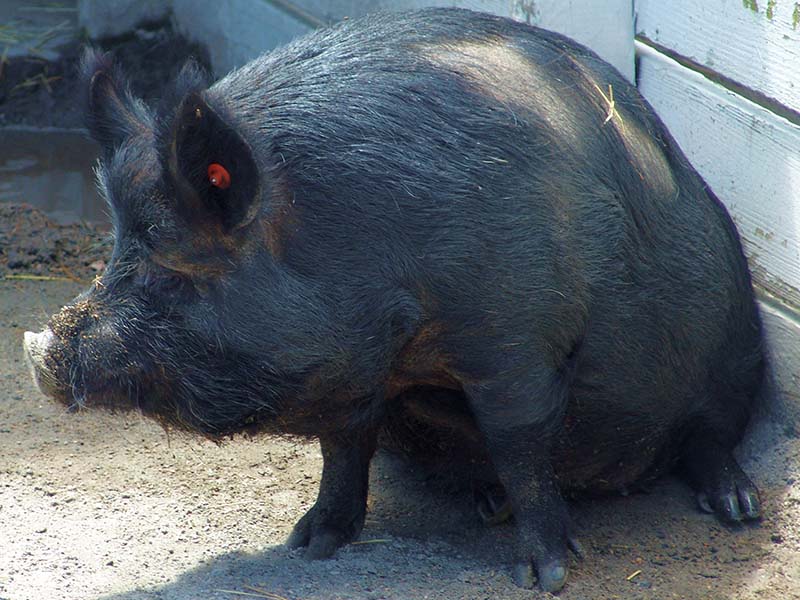
Historically, Guinea hogs were large and square, with reddish bristly hair, a long tail and pointed ears. They were hardy grazers and foragers that could be raised on mast and pasture and still produce lard and pork. Their numbers decline drastically with the collapse of the lard market and the shift away from backyard pork production.
Today's Guinea hogs are small, only 150-300 pounds and 15-20 inches tall when fully 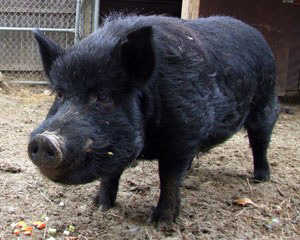 grown. They are usually black and often hairy. Guinea hogs are very gentle and easy to care for, making them popular at children's zoos, though they remain suitable for small scale pork production. Investigations are continuing into the relationship between modern and historically documented Guinea hogs.
Status: Rare
Associations and Registries
United States
American Guinea Hog Breeders Association
Angela Ingraham, President
250 Basset Road
Naples, NY 14512
Phone: (585) 374-2695
References
The Livestock Conservancy. PO Box 477, 33 Hillsboro St, Pittsboro, NC 27312